
Posts by Emma Emmerson
More Planting Trees available!
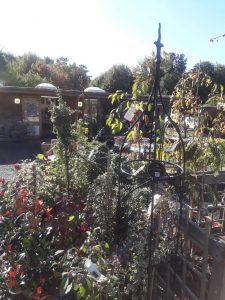
Some may be sad to see the end of Summer, but here at Woodside we are excited that Autumn has begun and that it is the start of Tree Planting season.
We have the best choice in the Scottish Borders for ornamental trees suitable for planting in this area.
So many to choose from, we have around:
-
14 varieties of Sorbus (Rowan & Whitebeam) to choose from including rare varieties such as: Ravensbill, Fingerprint, Bisetti Pearls, and Hemsleyi John Bond.
-
5 varieties of Liquidamber (Sweetgum Tree) which put on an exceptional show of autumn colour.
-
6 varieties of Malus (Crab Apple) which produce showy edible autumn fruits.
-
7 varieties of Betula (Silver Birch) including the aptly named variety “Edinburgh”.
We also have the stunning long needled Pinus Wallichiana, the rare oak Quercus Crimsonschmidt, beautiful Acer Rubrum October Glory, and the maple syrup tree – Acer Saccarinum.
All of which have good Autumn or Winter interest.
Please note – that some trees were ordered in as singles, meaning we only have 1 of that variety for sale. Once it’s gone, it’s gone. Interest in the trees this weekend is likely to be strong, so don’t delay your visit to pick out the tree you’re looking for.
Tree Planting for the Autumn Season
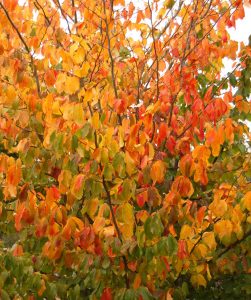
It is now tree planting season, and in stock we have a great choice of fresh trees available for the autumn season.
Grown in Yorkshire, the trees selected have been chosen for hardiness and autumn interest.
Highlights include:
Cercidiphyllum Japonica Pendula – The Weeping Katsura Tree, which has attractive heart shaped leaves which turn fiery shades of red and orange in the autumn. Originating in Japan, this ancient tree gives off an unmistakable smell of candyfloss in the autumn as the leaves begin to fall.
Liquidamber Palo Alto – This is a rare form of Liquidamber, rarely offered for sale in the UK, which has an upright habit, and leaves resembling a Japanese Maple. Liquidambers are well known for autumn leaf colour, and this one turns dark mottled red in the autumn.
Malus Rosehip – An attractive new form of crab apple which has masses of white blossom in the spring and forms beautiful rounded red fruits in the autumn, which strongly resemble rosehips in appearance. The fruits can be used for cooking, jam and jelly making, or left for the birds to enjoy.
Sorbus Joseph Rock – This is a yellow berried form of the native Rowan, or Mountain Ash, and is easy to grow and very hardy. A good plant for autumn berry colour in colder gardens.
Quercus Crimschmidt – This is a new Oak hybrid, sometimes called Crimson Spire, and it has a narrow habit with dark green leaves turning a stunning red in autumn.
Betula Jaquemontii – Probably the best of all the white stemmed birches, the Himalayan Birch is hardy and easy to grow, and is offered as a single or multi-stemmed tree.
Tree sales are likely to be brisk over the next few days, so if you would like us to reserve any of the trees listed please give us a call on 01835 830315. Better still, come in and see what trees we have, as there are many more varieties available.
The Age of the West Equine Show

Our annual equestrian theatre performance is nearly here!
“The Age of the West” is a unique production, performed by Equestrian Theatre Scotland, in the garden at Woodside. It is a one-off performance taking place next weekend on Saturday 10th August, and features stunning horses and talented riders, fresh from filming “Outlander” and who can also be spotted in “Game of Thrones” and in the recent film “Mary, Queen of Scots”. You may also see performing dogs and we are sometimes lucky enough to enjoy the performance of a talented goat! Combined with live music, a freshly prepared buffet supper, and an attractive setting in the garden – what more could you wish for?!
Tickets are on sale now, and can be purchased by calling during our opening times of 10-5, or you can call into the Plant Centre and pay in person. We accept all major cards except American Express. Tickets are £18 for adults, £12 for children and £50 for a family ticket (2 adults and up to 3 children). The ticket price includes a two-course buffet.
We are anticipating that this show will once again be a sell-out (we have been hosting the equestrian theatre for a number of years now) so please note that you will not be able to purchase tickets at the door.
Gates open at 6.15pm, with the buffet served from 6.30pm. The show starts at 7pm.
You are advised to bring something to sit on, such as a picnic blanket or deck-chair as we have limited seating, and also to bring with you everything you might need for an evenings outdoor entertainment (umbrella, midge repellent, sun glasses etc).
This year we have purchased two large gazebos, so there will be a certain amount of undercover seating in case of rain.
Don’t forget to book your tickets by calling us on 01835 830315 and have your card details handy. It should be a wonderful evening’s entertainment.
Recommended Roses
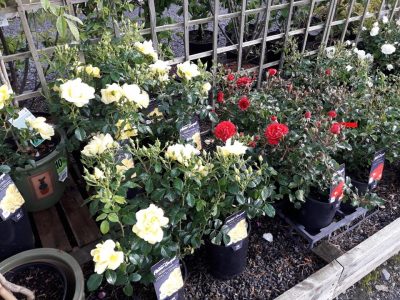
My favourite roses are back in stock – Flower Carpets.
These low growing roses provide weeks, if not months of beautiful flower colour, and are not subject to the rusts, mildews, blackspot and aphid damage that other roses can be prone to. As a result they are easy to grow in full sun or part shade, in any decent garden soil or in a container. Planting with Root grow and Bone meal improves performance even more. The only thing they are lacking is fragrance, but with so much in their favour I can forgive them that!
Colours now available at Woodside are Pink, Red Velvet, Scarlet, Amber, Sunset, Gold, White, and Ruby, so a great choice of colours to select from. These will sell quickly, so be sure to hurry.
Kailyaird Dining Evening – 19th July 2019
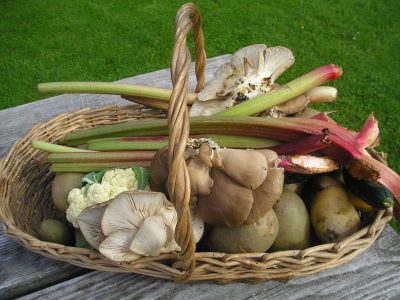
This Friday is another of our dining dates at Woodside, when our Birdhouse Tearoom becomes the Kailyaird Restaurant for the evening, catering mainly for vegetarians, but with an option for meat eaters. This week’s delicious menu features lots of home-grown produce from my garden, including beetroot, salad leaves, Arran Pilot potatoes and agretti, which is an Italian herb with a flavour similar to samphre. To book a table please phone on 01835 830315 – tables are available to book from 7pm.
Menu 19th July
Starters:
Mushroom and freshly picked tarragon soup served with rye bread and garlicky tarragon butter
Smoked salmon pate, topped with freshly picked agretti and served with g/f sweet potato biscuits
Freshly picked baby beetroot and goat’s cheese salad with balsamic dressing
Mains:
Fennel and chickpea stew served with creamy oven baked potatoes scattered with fresh rosemary
Mediterranean fish bake with courgettes, black olives, tomatoes and freshly picked herbs, served with fresh tagliatelle
Spicy bean chilli served with rice and a cooling soured cream and courgette “slaw”
Slow cooked pork belly in cider and sage leaf, with baby carrots, peas and creamy oven baked potatoes
Puddings:
Strawberry mousse cheesecake with fresh strawberries and cream
Black Forest chocolate log with fruit infused soured cream
Raspberry and hazelnut meringue “Eton Mess”
Cheese, home-made chutney and biscuits
Gluten free, vegan diary free options available – please let us know when you book
We have a good selection of interesting soft drinks available to purchase, but currently do not have a license to serve alcohol. If you wish to bring your own wine you are more than welcome – the corkage fee is £2 per bottle.
Perfect Time to Plant Trees
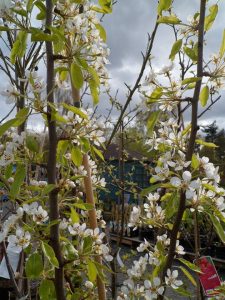
The ground is absolutely perfect for planting trees at the moment, with some moisture and plenty of warmth.
Don’t forget to enrich the ground with Bonemeal or pelleted chicken manure to give the plants a good start.
Poor soils may also benefit from the addition of tree planting compost, just to help improve the soil structure to make it easier for roots to push through, and all plants get a boost when planted with “Rootgrow”. Just ask a member of shop staff and we can show you these products.
FULL LOYALTY CARD OFFER FOR JULY
If you’re not sure about growing trees, we have a fabulous offer now on:
There are a lot of full loyalty cards out there, so if you’d like to redeem a full one, you can enjoy £5 off any tree of £32.99 or more (including fruit and ornamental trees) when you hand over a full loyalty card.
One card per item please. Not to be used with any other voucher scheme. (excludes pre-ordered or pre-reserved items) Offer valid from 22nd June until the end of July 2019.
Loyalty Card Offer
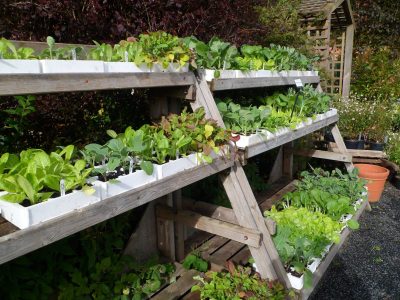
There is just a week to go on our loyalty card holder offer
I know that there are lots of full loyalty cards now in circulation after a busy spring buying plants! Up until 17th June, we are offering 10% OFF all bedding and vegetable plants when you hand in a full loyalty card ( 1 card per transaction).
Let us know at the beginning of the transaction that you will be redeeming a full card, so that we can process your discount.
Wildlife and Wellbeing Garden needs your help
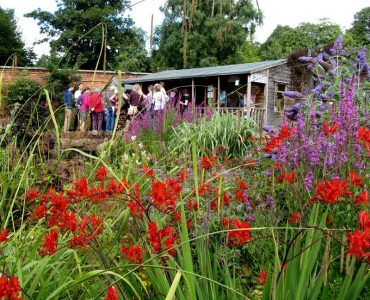
Our registered charity – the Woodside Garden for Wildlife and Wellbeing (WGWW) – would appreciate some help.
Moving stones
Our major project for the year is the building of a drystane seating area in the wildlife garden, suitable for wheelchair users to access. On Thursday 6th June we are having some stone delivered, and we would like some help to shift it! It’s expected to arrive at about 11am, and will probably take around an hour to move. If you’d like to help, please turn up with sturdy shoes and gloves.
Publicity/social media assistant
We are also looking for someone to assist the Board members with publicity. You don’t need to become a member of the Board (although we would be delighted to have new members) and you don’t need to commit to regular times. All you need is an enthusiasm for using social media, such as Facebook, and the willingness to learn how to update the charity’s website. If this interests you, either come in and see me (Emma) or, better still, drop in at one of the Wednesday Weeding Workout sessions to meet other volunteers.
You can see more of charity’s work on the facebook page
How to Choose Plants for Your Pond

Here at Woodside we have decided to stock water plants, after so many customers have asked us to, so I thought I’d tell you a bit about water gardening and how to choose plants for your pond
Wildlife Habitat
Ponds make a wonderful addition to the garden – as well as creating extra habitats for wildlife, it also provides different planting conditions for a whole host of plants. The most successful ponds tend to have a boggy area next to them to allow moisture loving plants to grow there and to make a smooth transition from pond to garden. Not only that, but the sound of moving water is very relaxing, and the presence of fish in the pond gives an extra dimension to your enjoyment of your garden. Ponds are generally sited in sunny spots, which makes plant growth stronger, but also encourages algae growth.
Water Lilies
Ideally a pond should have 30-40% of its surface area covered with plant leaves, using plants such as Water Lilies, and other deep water marginals like the very pretty Water Hawthorn (Aponogeton) and the Yellow Fringed Lily, which isn’t strictly speaking a lily at all, but a close relative (Nymphoides Peltata). This will help shade the water from the sun and reduce algae growth. Water lilies prefer still water to moving water, so be sure to site them away from fountains and inlet streams, and read the label carefully to make sure they are at the right depth within the pond. Miniature Water Lilies can be submerged in large water-tight containers if you don’t have space for a pond.
Oxygenators
Oygenators and floating plants are vital for the health of the pond. Oxgenating plants grow and photosynthesise under water, releasing oxygen into the water which is essential for water dwelling animals as well as for keeping the water full of healthy bacteria to help keep it clean. Crystal Confetti (Hydrocotyl) is one of the most attractive oxygenators and should be submerged in the pond. Floating plants, such as Water Soldiers (Stratiotes) can simply be thrown into the pond, making them the easiest plant in gardening to actually plant! Barley straw products also help keep pond clear and they act as an algae inhibitor – the product we currently have in stock treats up to 2000 gallons and last approx. 6 months.
Height and Structure
A selection of tall, grass like plants are useful for height, structure and for allowing emerging larvae of dragonflies to hatch. Recommended varieties are Lesser Bulrush (Typha Angustifolia) and any of the water loving Irises. Other marginal plants provide colour and texture.
Bog Garden
By creating a bog garden you give yourself the opportunity to plant a whole range of plants from the beautiful green foliage of Hostas and Ferns to the bright colourful flowers of Candelabra Primroses.
We have a good selection of water plants available, so why not drop by if your are planning to create your own pond from scratch or re-stock your existing one.
More Vegetable Plants in Stock
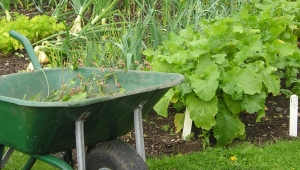
If you are planning to grow your own vegetables this summer, now is the time to get planting. We have some varieties home-grown from seed and ready to plan on. Varieties currently available include lettuce, garlic kale, scarlet kale, courgette and calabrese. Also a good range of greenhouse vegetables such as tomatoes, cucumbers and peppers.
Local Vegetable Plants
We are pleased that we can work with other local suppliers too, enabling us to bring you a wider selection. Further choices includes: runner beans, leeks, french beans, sprouts, broccoli, cabbage, carrot, parsley, peas, sweetcorn and swede.
Have a peek through the greenhouse door and you’ll see I’ve got plenty more coming on, including broad beans, climbing courgettes and coriander.